Guide To Buying Irrigated Acreage In Corrales
July 23, 2026
July 23, 2026
If you are shopping for acreage in Corrales, the biggest question is not always how much land you can buy. It is whether that land actually works for the way you want to live, farm, garden, or keep animals. In a village shaped by acequias, agricultural zoning, and open-space values, buying irrigated acreage takes more than a quick look at lot size. This guide will help you understand the key issues to verify before you make an offer, so you can move forward with more clarity and confidence. Let’s dive in.
Corrales is not a typical suburban land market. The village is still closely tied to farming, irrigation, and rural land use, with the 2024 Corrales Comprehensive Plan describing a community shaped by the Rio Grande, fertile valley soils, and acequia irrigation.
That agricultural identity is still visible today. The plan reports 319 properties with agricultural exemptions in tax year 2024, about 302 self-reported horses, several training, boarding, and breeding facilities, multiple wineries, and year-round growers’ market activity. If you buy acreage here, you are stepping into a place where farming, livestock, and open land are normal parts of daily life.
Some parcels may also carry a long-term preservation purpose. Corrales’ Farmland Preservation & Agricultural Commission works with owners to help keep land open for farming, including through conservation easements and development-rights purchases. That means a property may offer privacy and rural character, but it may also come with limits that need careful review.
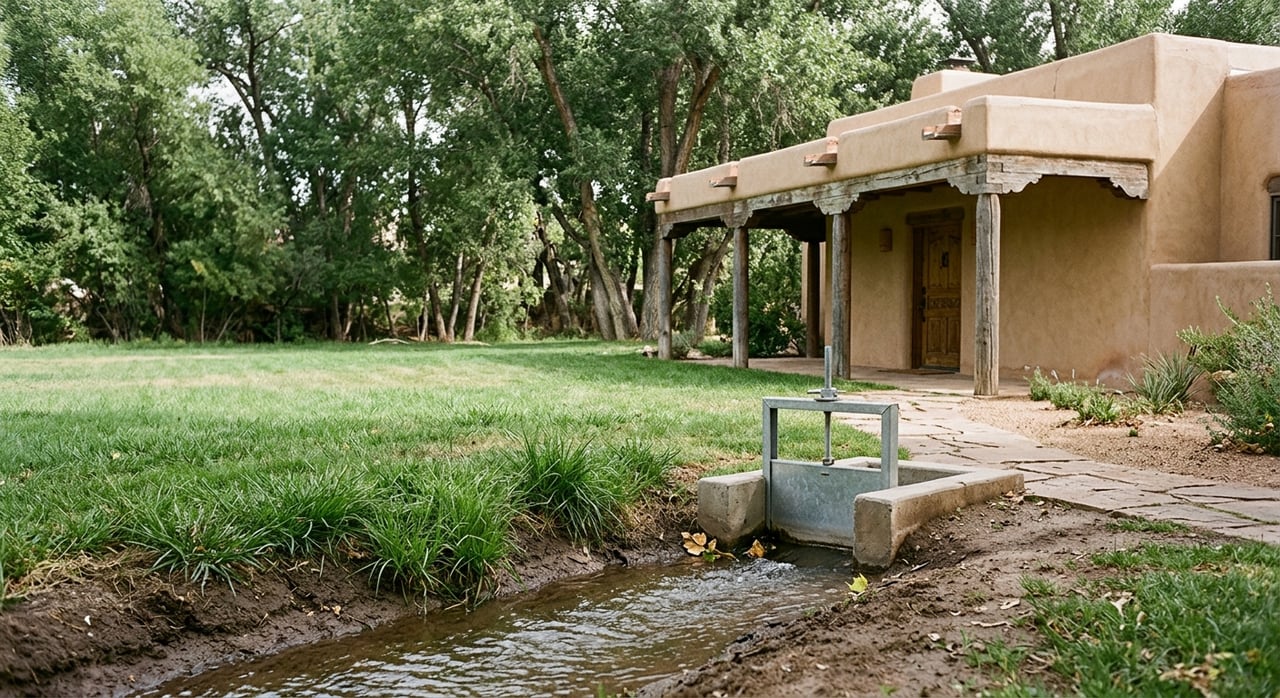
When you buy irrigated acreage in Corrales, water should be at the top of your due diligence list. The village’s historic field pattern grew out of acequia irrigation, and that history still affects how land is laid out and used today.
Just as important, surface irrigation is not guaranteed from season to season. The Middle Rio Grande Conservancy District reported in 2026 that irrigation deliveries in the Corrales area were suspended when river levels dropped below the pumping threshold, and that the season depended on limited storage water and whatever natural flow was present in the Rio Grande.
That means ditch frontage alone does not tell the whole story. A parcel may look ideal on paper, but you still need to understand how irrigation access works in practice and whether delivery conditions may vary.
Before you move forward, ask for clear documentation and local context on:
The Village of Corrales also makes an important distinction here. Its planning office says it does not handle private water-rights disputes, private easements, private roads, or private agreements. In other words, part of the property’s water story may live in title records and private documents, not just in what you can see from the road.
Many buyers assume acreage near Albuquerque will function like a standard residential property with a simple municipal utility setup. Corrales is different.
The village’s draft 40-year water plan says Corrales owns water rights for municipal, domestic, sanitary, irrigation, and fire-suppression uses, and that it relies on eleven groundwater wells. The Comprehensive Plan also states there is no municipal water system in the village.
For you as a buyer, that means it is wise to evaluate water systems separately rather than assuming a city-style model. A parcel’s well, irrigation access, wastewater setup, and fire-related water infrastructure may all need individual review.
If you plan to build or significantly improve acreage, utility review becomes even more important. Corrales code says a building cannot be occupied unless it is connected to a functioning well or water supply system permitted by the State Engineer and a functioning liquid waste system permitted by the New Mexico Environment Department.
The code also adds a specific rule for larger greenhouses. Greenhouses over 120 square feet require evidence of State Engineer approval for the well and water use tied to the crop. If your vision includes gardening, specialty crops, or a small agricultural setup, this is worth checking early.
A beautiful piece of land can still be the wrong fit if zoning does not support your intended use. Corrales has two agricultural and residential zones that show up often in acreage searches: A-1 and A-2.
A-1 is intended to maintain a rural and open-space character with low-density residential and agricultural development. A-2 is also intended for rural and open-space character, with low-density residential development on larger lots.
The minimum lot area in A-1 is 43,560 square feet. In A-2, the minimum lot area is 87,120 square feet. Both zones allow one dwelling unit per lot and allow agricultural uses, crops, and livestock, subject to nuisance, waste, and drainage controls.
Zoning shapes more than whether you can build a house. It affects how the land functions once you live there.
If you want horses, goats, chickens, or a small farm operation, Corrales code allows agricultural uses in these zones, but it also requires manure and waste to be contained so they do not pollute irrigation ditches, groundwater, drains, or surrounding property. The code also allows storage of agricultural equipment and trailers owned by the resident, which is one reason Corrales often feels more rural and practical than a subdivision setting.
Corrales has a strong equestrian and agricultural identity, and that matters when choosing acreage. The zoning code defines a pathway as something designed primarily for pedestrian, equestrian, and non-motorized vehicular use, while the Comprehensive Plan notes that horseback riders are common on village roads.
For buyers who want a horse-friendly lifestyle, that can be a real advantage. At the same time, it also means you should expect road-sharing, fencing considerations, and day-to-day awareness of how rural traffic and agricultural uses work in the village.
Buyers should also be prepared for normal agricultural impacts. Before a transfer, Corrales requires a Right to Farm attachment that includes zoning sections and the New Mexico Right to Farm Act. Its purpose is to advise buyers about permissive uses in each district, including the right to maintain livestock and farm.
In practical terms, that means you should expect the sights, sounds, and rhythms of working land. Equipment noise, odors, animals, and seasonal field work are part of the setting many buyers come to Corrales to enjoy.
One of the most important steps in buying irrigated acreage is confirming what is recorded against the property. Corrales says covenants, deed restrictions, plats, easements, and rights-of-way are kept at the Sandoval County Clerk’s Office.
That review matters because some acreage may be subject to conservation easements or other long-term restrictions. The Farmland Preservation & Agricultural Commission notes that conservation easements stay with the property even when ownership changes.
So before you assume you can divide, expand, or change the use of a parcel, confirm what rights actually transfer with it. Privacy and open space can be valuable features, but they can also come with obligations.
Floodplain review is a major part of acreage due diligence in Corrales. The Comprehensive Plan says most of Corrales lies within the geologic floodplain of the Rio Grande.
It also notes that some areas east of the main canal are in shallow flood zones, while the western sandhills have highly erodible soils that require careful stormwater management. These are not small details if you plan to build, expand structures, or invest in long-term land improvements.
The village uses a certified floodplain manager to determine flood-zone status when permits are requested. Even if a property looks dry and usable during a showing, it is smart to understand how floodplain and drainage conditions may affect future plans.
Property taxes can have a big impact on the long-term cost of owning acreage. In Sandoval County, the Assessor offers an agricultural special method of valuation, including applications for irrigated farming and grazing.
The county’s FAQs say eligibility is use-based and subject to filing deadlines. The office also notes that one acre of non-improved land is generally the minimum for agriculture, with a smaller orchard exception in some cases.
This is one area where assumptions can get expensive. A horse property, hobby farm, orchard parcel, or small vineyard should be checked individually rather than assumed to qualify for agricultural valuation.
On acreage, the layout of the whole property matters. Corrales’ Comprehensive Plan notes that the village values tree canopy for filtered shade, while also recognizing that trees need proper irrigation and that excessive building height or tall trees can interfere with solar access.
That means your planning should go beyond where the home sits. It helps to think through where a barn, greenhouse, orchard, garden, windbreak, driveway, and outdoor living areas fit in relation to irrigation lines, winter sun, and long-term maintenance.
A parcel that looks beautiful on first impression may function very differently once you map out daily use. The best acreage purchases usually balance lifestyle goals with the practical realities of water, drainage, access, and land stewardship.
Buying irrigated acreage in Corrales is often about asking better questions, not just moving faster. The strongest purchases usually happen when you take time to understand water access, zoning, recorded restrictions, floodplain conditions, and tax treatment before emotions take over.
This is also where local experience matters. Acreage, horse properties, and rural land often involve layers that do not show up in a standard home search, and a calm, detail-focused approach can help you avoid surprises later.
If you are considering irrigated acreage in Corrales, Summit Group Real Estate Professionals can help you navigate the details, evaluate the property story, and move forward with clear local guidance.

The Decisions That Shape a Successful Sale in Santa Fe, NM.
Reaching the Buyers Who Want a Home Like Yours in Santa Fe, NM.

Getting a Home Ready for Buyers in Santa Fe, NM.
What the Right List Price Earns a Seller in Santa Fe, NM.

Design, Renovation & Remodeling
Where in Santa Fe to find the best pieces, from rugs to chandeliers.
Summit Group Real Estate Professionals offers unmatched real estate expertise in Northern New Mexico with over 35 years of market knowledge. Our team combines local roots with global reach through Berkshire Hathaway HomeServices, providing dedicated service for both buyers and sellers.