The Street Named for a Ditch Still Needs Someone to Clean It
August 27, 2026
August 27, 2026
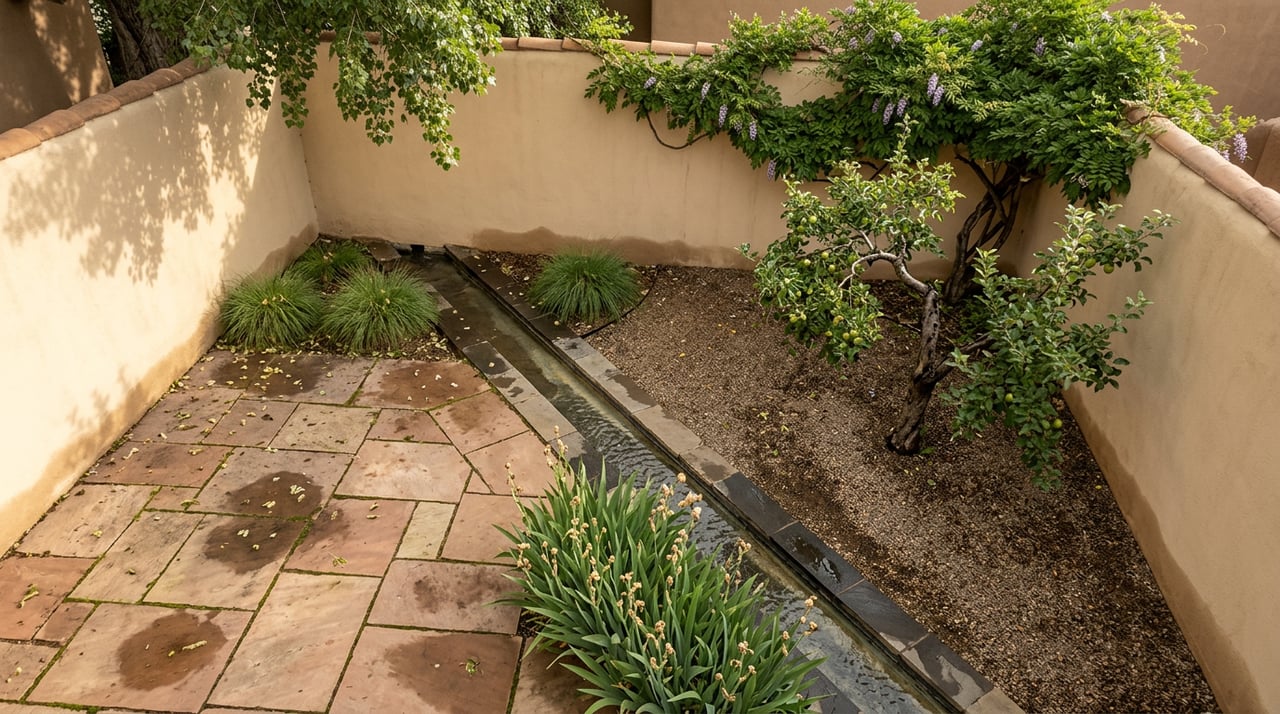
Walk down Acequia Madre on an August morning after a monsoon storm and you can hear it before you see it: a thin ribbon of water moving under the cottonwoods, threading past adobe walls thick with wisteria that hasn't finished blooming for the season. Most people who pass through assume the ditch is decoration, a nod to old Santa Fe left in place because it photographs well. It isn't. The Acequia Madre is a working piece of infrastructure with a legal charter older than the city itself, and the reason this particular street still looks the way it does has less to do with historic preservation ordinances than with a shrinking group of neighbors who show up every year with rakes.
That distinction matters if you live along this corridor, because the postcard version of the street and the actual one are kept up by different things.
The Acequia Madre, or Mother Ditch, predates Santa Fe's founding in 1610, with its main construction dated to around 1680 during the era of the Pueblo Revolt. The Historic American Engineering Record calls it the oldest Spanish acequia system remaining in the Southwest that can still be traced today. It runs roughly seven miles through the city, and it operates under acequia governance rules that trace back to early Spanish water law: a mayordomo, or ditch boss, and a board of three commissioners oversee the system, while property owners with water rights, called parciantes, pay an annual fee and take on shared responsibility for keeping their section clear.
As of the most recent cleaning in April 2026, the ditch served 47 parciante households. That number has actually grown since the 1970s, when only about 16 households used it for irrigation. The increase isn't a sign of a farming revival on Acequia Madre. It happened because the community ditch association secured a permit allowing water rights holders to lease their shares, which let more property owners formally attach to the system even as the acreage under active cultivation shrank. The paperwork expanded while the orchards didn't.
Once a year, usually in early spring, the parciantes and their neighbors gather for the limpia, the traditional cleaning that keeps the channel from clogging before the growing season's water starts moving. The 2026 cleaning was the 416th of its kind, opened with a blessing from mayordomo Eric Montoya asking for a safe day of work and a good year of water.
The debris isn't dramatic. It's mostly compressed leaves and the small nests of sticks that build up in a channel only two to five feet wide and one to two feet deep. Pitu Martín, a 30-year resident and eighth-time limpia participant, still irrigates a small yard of trees, flowers, and irises off the ditch, and she's described the appeal less as gardening and more as maintenance: get the leaves and sticks out before they dam the flow.
Kids from Acequia Madre Elementary School work the cleaning too, part of a curriculum the school added on acequia history and function. It's a practical way of making sure the next generation of Eastside residents understands what that channel running past the playground actually does, rather than treating it as a landscaping feature that happens to have a name.
Seven miles of channel. Forty-seven households sharing the maintenance. Four hundred sixteen years of someone showing up to clean it.
The people running the acequia today inherited the role rather than volunteering for it cold. Commissioner Miche Bové Garcia grew up in the house her mother was born in, right off the Acequia Madre, and has been part of the cleaning her entire life. Her father, Phillip Bové, served as a commissioner from around 1974 until he stepped back from the role, passing responsibility to a newer generation that includes Garcia and Montoya. Montoya has said he intends to keep the mayordomo position as long as he can, following the same path his own family took before him.
That kind of succession isn't nostalgia. It's the only mechanism this ditch has for staying maintained. There's no city department that cleans the Acequia Madre. There's no homeowners association fee that covers it. It runs because specific families keep choosing to do the work their parents did, and if that chain breaks somewhere along the seven miles, the parts of the street that depend on it, the cottonwoods, the fruit trees, the small kitchen gardens behind the walls, would start to look different within a few seasons.
The ditch isn't the only reason this stretch of the Historic Eastside functions the way it does day to day. A short walk along Acequia Madre and the streets that feed into it turns up a run of small, specific places that longtime residents already treat as fixed points:
None of these are new. That's the point. The Eastside's daily rhythm runs through the same handful of buildings it has for decades, and the ditch that gives the street its name is part of the same continuity, not a separate historical artifact sitting next to it.
Spring cleanings happen before the channel is carrying much water, which is part of why the work is manageable: raking leaves out of a dry ditch is different from raking them out of a running one. The limpia is timed to finish ahead of the water, not during it. By the growing season, the same channel that got cleared in April is doing the job it was built for, moving water from a headgate near Patrick Smith Park down through the households still irrigating trees and gardens along the way, with summer monsoon storms adding runoff to the Santa Fe River that feeds it.
That means the version of Acequia Madre a resident hears in late August, water moving audibly under the walls after a storm, is the same infrastructure the neighbors raked clean in April, now doing the job that cleaning was for. It's one more reason the ditch stays relevant to the street's character across every season rather than just during the spring cleaning window.
Canyon Road, which sits inside the same historic district as Acequia Madre, holds its Paint and Sculpt Out twice a year, once in spring and again in the fall. Past fall editions have landed in October, when dozens of galleries open their doors for artists to work in full view of visitors, a lower-key echo of the spring event without the crowds that come with warmer weather. It's not tied to the acequia directly, but it's part of the same neighborhood calendar that longtime Eastside residents already track, alongside the limpia in spring and the monsoon season now.
The Historic Eastside gets described often as a place where history and luxury sit side by side, and that's true enough as far as it goes. What that framing tends to skip is the mechanism underneath it: a legal water system nearly 350 years old, run by a handful of families who took over the job from their parents, cleaned every spring by whoever still shows up with a rake. The wisteria, the cottonwoods, the small orchards behind the walls, all of it depends on that system continuing to function, not on the street's reputation holding it in place on its own.
If you live along Acequia Madre, or anywhere in the Historic Eastside, that's worth knowing the next time you walk past the channel and hear water moving through it. It isn't just old. It's still being kept that way, on purpose, by people whose names you now know.
For questions about the Historic Eastside or any of the neighborhoods across Northern New Mexico, Summit Group Real Estate Professionals is available to talk through what local ownership actually involves here, from the parts that show up in a listing to the parts that show up every April with a rake.

Unique Ways to Spend a Memorable Night in Santa Fe.

Mountain Trails, Fitness Facilities, and Winter Sports Near Santa Fe.
How to Visit Santa Fe’s Galleries, Markets, and Moonlit Studios.
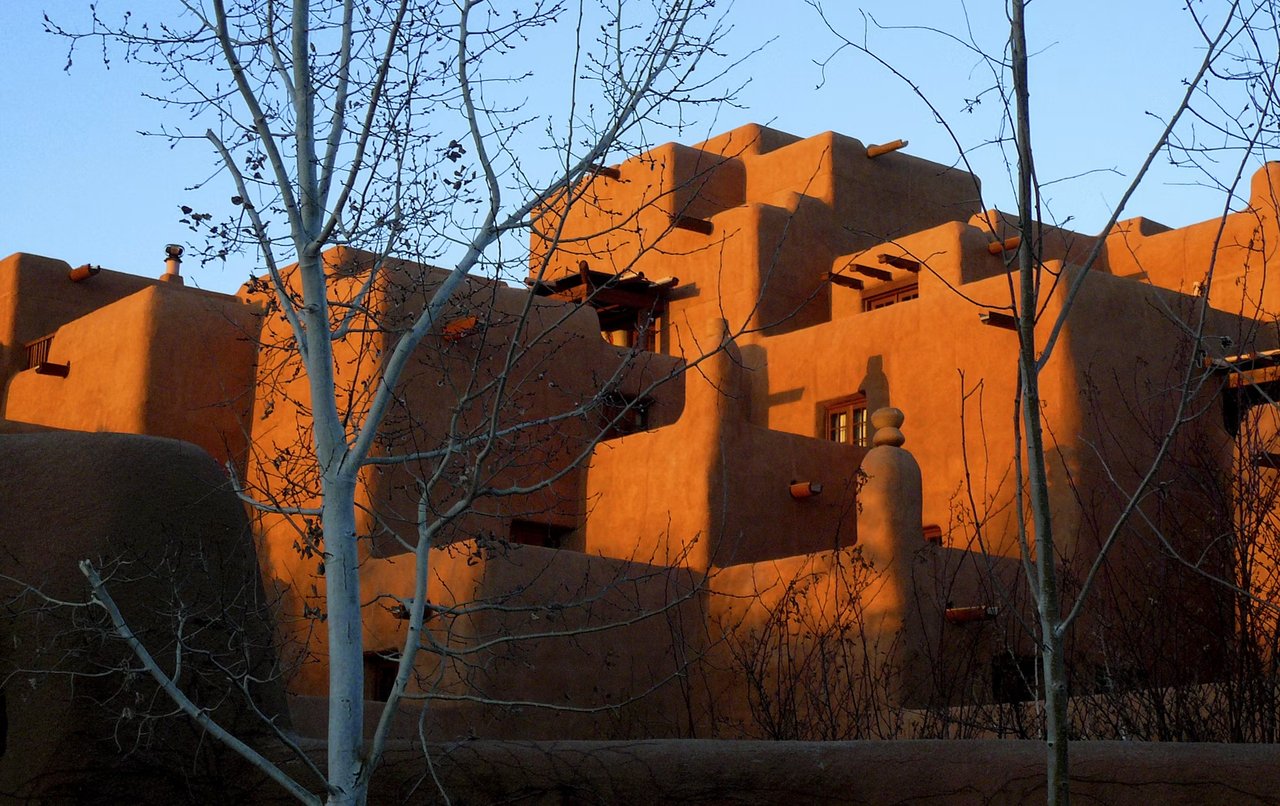
Adobe Walls, Ancient Landmarks, and Endless Art in Santa Fe.
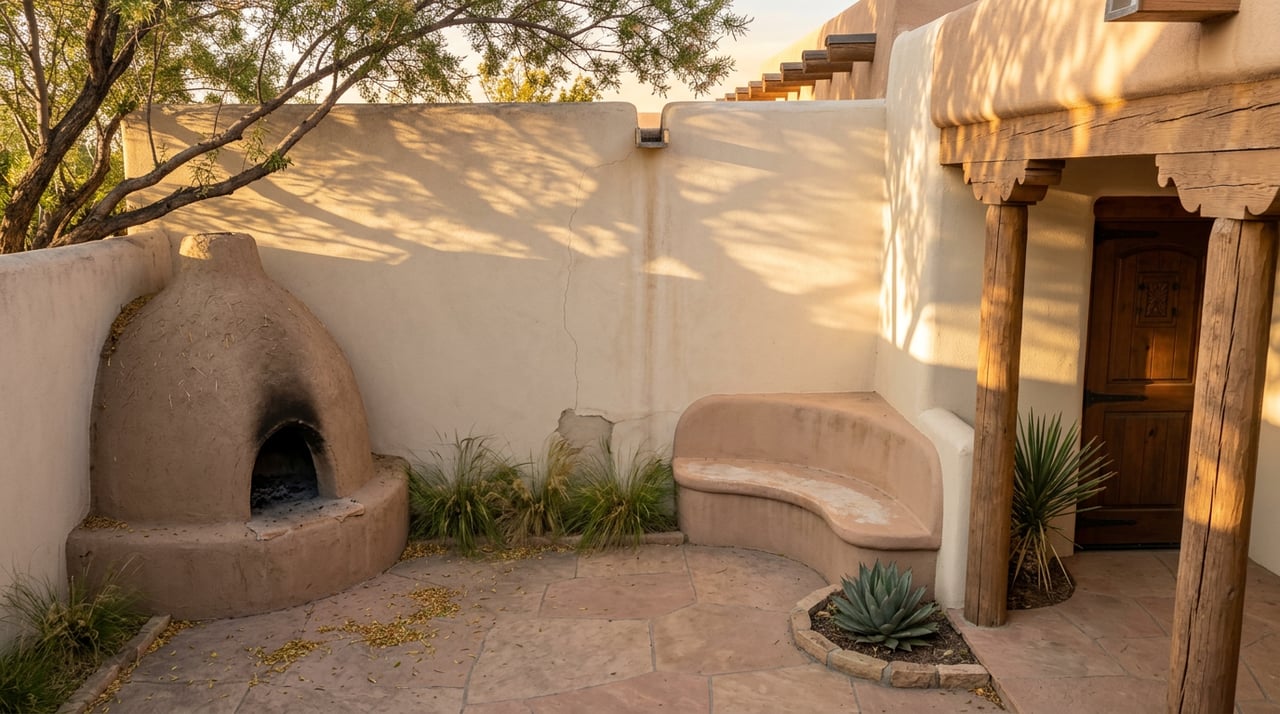

The Details First-Time Buyers Often Miss.

What Buyers Should Know Before They Start Touring Homes.
Summit Group Real Estate Professionals offers unmatched real estate expertise in Northern New Mexico with over 35 years of market knowledge. Our team combines local roots with global reach through Berkshire Hathaway HomeServices, providing dedicated service for both buyers and sellers.