By Summit Group Real Estate Professionals
Few cities protect their built environment as deliberately as Santa Fe. The adobe streetscapes, walled courtyards, and centuries-old compound arrangements that make the city's historic neighborhoods so compelling are actively maintained through a regulatory framework that governs what can be changed, how, and by whom.
For buyers drawn to real estate in historic districts, that framework is central to understanding what ownership in these neighborhoods actually involves. This guide covers what you need to know before you make an offer.
Key Takeaways
- Five historic districts, one governing body: The City of Santa Fe maintains five designated historic districts (Downtown, Eastside, Westside-Guadalupe, Don Gaspar, and Historic Transition), all overseen by the Historic Districts Review Board
- Contributing versus non-contributing status matters enormously: Whether a property is classified as contributing, significant, or non-contributing determines how much regulatory latitude you have for exterior changes
- Exterior work requires pre-approval: Almost any change visible from the street (windows, stucco color, roof work, garden walls, fencing) must be approved before work begins
- Adobe construction demands specific maintenance knowledge: Moisture management is the defining challenge of adobe ownership, and buyers who understand this before purchasing are better positioned than those who learn it after
The Five Historic Districts and What They Cover
Santa Fe's five historic districts each carry their own character and buyer population, but all operate under the same regulatory structure administered by the Historic Preservation Division.
The Five Districts at a Glance
- The Historic Eastside: The most restrictive and most sought-after district, the Eastside encompasses the neighborhood immediately east of the Plaza, running along Canyon Road and through the acequia-threaded streets toward the Sangre de Cristo foothills. Properties here command significant premiums and carry the tightest protections
- Downtown and Westside-Guadalupe: These districts cover the Plaza area and the Guadalupe and Railyard corridor respectively, blending residential and commercial uses within a preserved historic envelope. Properties in these districts are more varied in type and price point than the Eastside and offer buyers entry into real estate in historic districts at a broader range of budgets
- Don Gaspar and Historic Transition: The Don Gaspar district runs south of the Plaza and covers a residential neighborhood of adobe homes on tree-lined streets. The Historic Transition district serves as a buffer zone between the core historic areas and the surrounding city
Each district has a GIS mapping layer available through the City's planning portal that shows individual building status, which should be one of the first things a buyer checks for any specific property.
Contributing, Significant, and Non-Contributing: What the Terms Mean
The single most important designation to understand before purchasing real estate in historic districts in Santa Fe is whether a property is classified as contributing, significant, or non-contributing.
How the Classifications Affect What You Can Do
- Significant properties: The highest level of protection, applied to buildings of recognized architectural or historical importance. Modifications to significant properties receive the most thorough HDRB scrutiny
- Contributing properties: The most common classification in the historic districts, applied to buildings that add to the character of the district, typically older structures built in traditional styles. Almost any exterior alteration, including window replacement, stucco work, re-roofing, garden wall changes, and paint color, requires pre-approval
- Non-contributing properties: Usually newer buildings that do not reflect the historic character of the district. These carry somewhat more flexibility but still fall under HDRB design review requirements. Buyers sometimes assume non-contributing status means minimal oversight
The HDRB can also revisit a property's designation when a significant modification is proposed, which means a buyer should not assume that a non-contributing status established at a prior date will remain unchanged if they propose substantial alterations.
Adobe Construction: What Ownership Requires
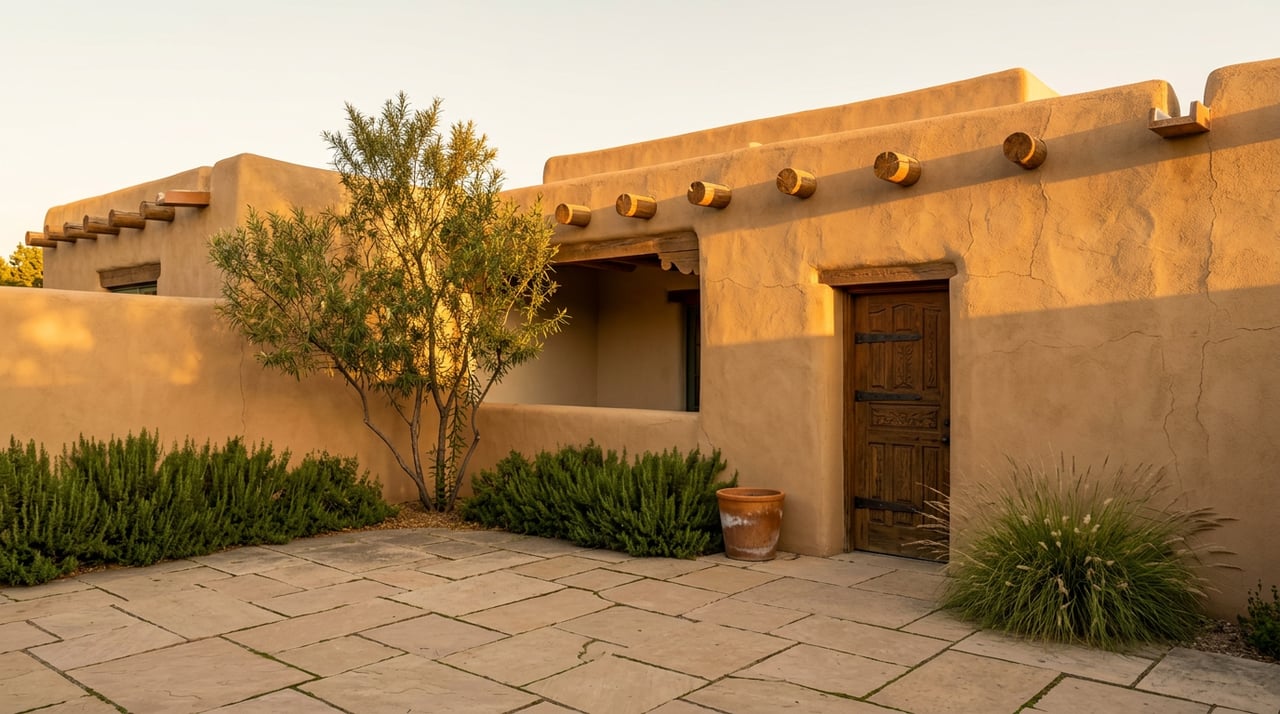
The vast majority of properties in Santa Fe's historic districts are built of adobe, thick earthen walls that provide exceptional thermal mass.
The Key Maintenance Realities of Adobe Ownership
- Moisture is the primary threat: Adobe walls retain their structural integrity only when kept dry. A watertight roof with proper drainage, functioning parapets and gutters, and grading that directs water away from the foundation are not optional maintenance items
- Compatible materials matter: Non-breathable coatings can cause more damage to adobe than neglect. Preservation guidance consistently favors breathable lime and earth plasters that allow moisture to migrate outward rather than accumulate within the wall
- Permitted renovation history deserves scrutiny: Historic districts require that exterior work be pre-approved before it begins. Buyers should request and review the property's permit history at the City's Land Use Department to confirm that past renovations were properly permitted
Adobe homes add a visual authenticity that no modern substitute replicates convincingly.
What the HDRB Review Process Involves
Major alterations, additions, and projects requiring exceptions to district standards go before the full board.
How the Process Works in Practice
- Administrative approval covers routine maintenance: Minor repairs, in-kind replacements, and small alterations that fall within established guidelines can often receive administrative clearance with documentation and a site visit
- HDRB hearings apply to larger projects: Additions, substantial alterations, window replacements with non-matching materials, and projects seeking exceptions to the 50 percent historic footprint limitation require a full board hearing
- Pre-application consultation is available and worth using: The City offers a pre-application site visit for a modest fee. Buyers planning renovations before closing should consider using this process to understand what is approvable before they commit to a purchase that depends on specific alterations being permitted
Administrative approvals are handled by Historic Preservation Division staff and carry lower fees and shorter timelines than a full board hearing.
FAQs
Can I Make Interior Changes Without HDRB Approval?
Yes, in most cases. The HDRB's jurisdiction covers exterior alterations visible from public rights of way. Interior renovations, reconfiguration, and modernization of systems generally proceed without historic review, though standard building permits still apply.
Does Historic District Status Affect Property Value?
It tends to support it. Real estate in historic districts in Santa Fe has historically maintained strong demand and limited supply, which sustains values across market cycles. The same constraints that restrict what individual owners can do also prevent the character erosion that reduces values in unprotected areas.
What Should I Do Before Making an Offer on a Historic District Property?
Confirm the property's contributing or non-contributing status, review the permit history at the Land Use Department, engage a licensed home inspector with specific experience in adobe construction, and consult with us about what similar properties have sold for and what renovation scopes have been approved in the area.
Contact Summit Group Real Estate Professionals
Santa Fe's historic districts are not like other markets. The properties are older, the rules are specific, and the due diligence process has details that matter in ways that only become clear once you know what to look for.
If a historic district home has caught your attention, reach out to us at
Summit Group Real Estate Professionals before you go further. The questions worth asking are best asked early.